Field report 05 · 12 min · Lighting · Night
The night-lit façade and the most ambitious night-lighting scheme in Egypt
On the night-lighting scheme by a Berlin lighting practice, the graduated warm-light wash of the limestone, and the most ambitious night-lighting in Egypt.
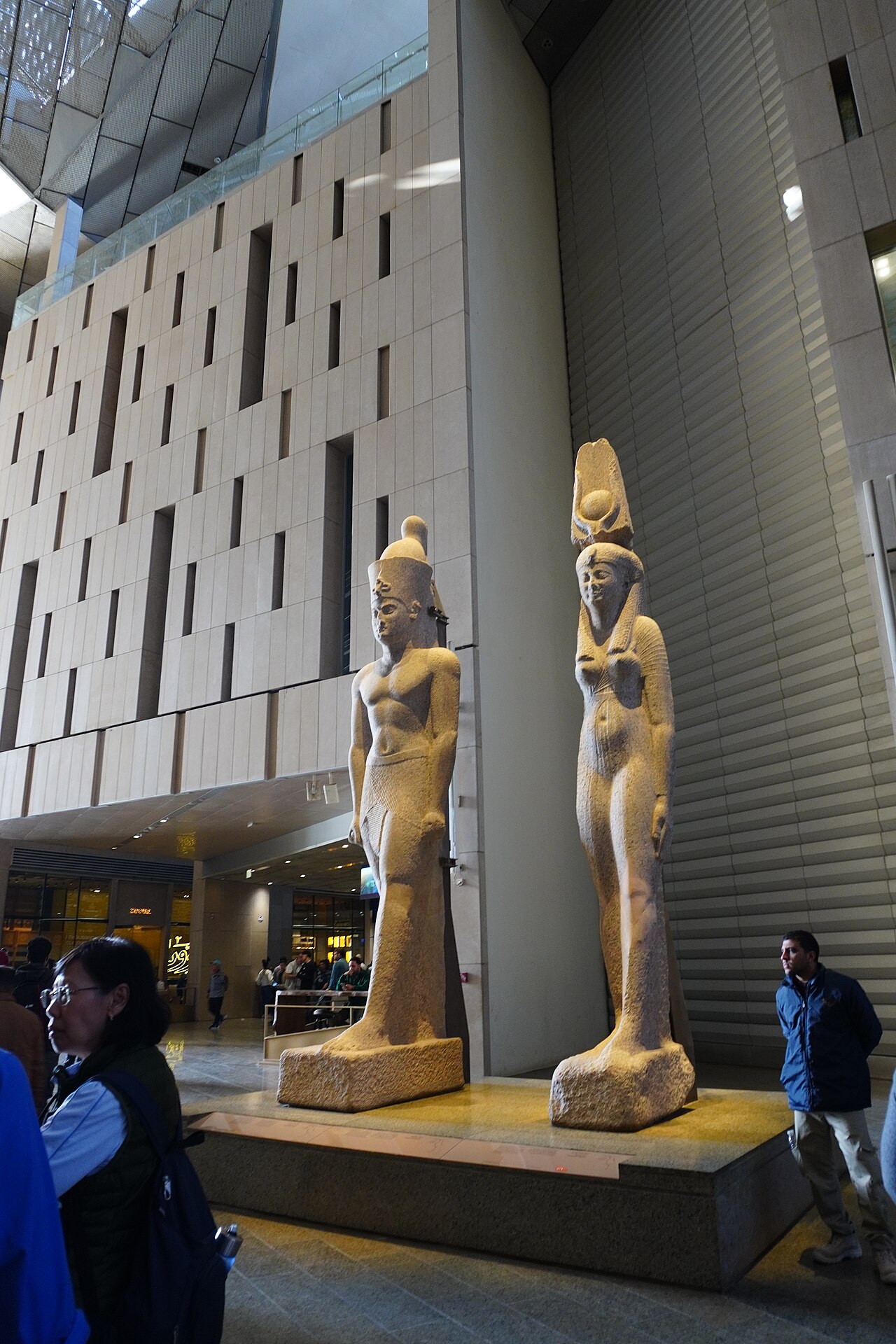
Cairo · April 2026
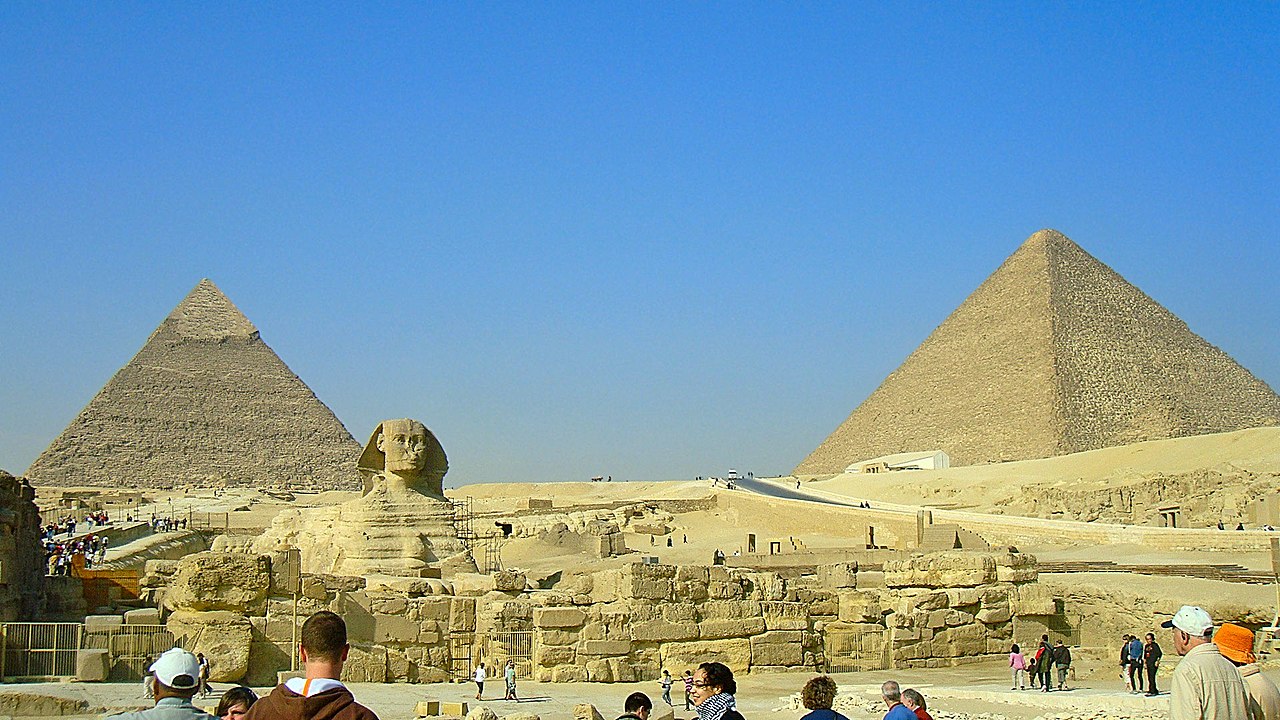
The GEM is the most ambitiously night-lit institutional building in Egypt. The night-lighting scheme — by a Berlin lighting practice, in collaboration with the architects — washes the limestone wall, the alabaster screen, and the obelisk in graduated warm light that is visible from the desert road.
I had been wanting to write this report since the museum opened, in November of last year. The opening week, when the press and the dignitaries and the camera crews were thick on the floor, was not the right time to look slowly at anything. I waited until late January, when the building had settled into something like a normal working rhythm — visitors in the morning, school groups in the early afternoon, a long quiet hour between four and the late closing at six — and went back, with a notebook and the small folding stool I take when I expect to be reading labels for several hours.
The room as I found it
The night occupies a place in the museum's plan that the architects, in their published statements, have always described as central to their reading of the brief. The Grand Egyptian Museum is, in plan, a triangulated building — its principal axes extend from the entrance courtyard to the three Giza pyramids — and the gallery I am writing about here sits on one of those axes, with the implication that the curatorial team and the architectural team were, at the level of the building's geometry, working together. Whether that intention has survived the long delays of the museum's construction is a question this report will return to.
On the morning of my first long visit I arrived as the doors opened. The galleries were almost empty for the first forty minutes — a curator was setting out information cards in the next room, a security officer was reading the early edition of Al-Ahram on a bench, and there was the small hum of the climate system that the museum runs at, I am told, four degrees colder than is comfortable in winter for the sake of the objects.
What the room is for
To understand the room you have to understand the brief that produced it. The Grand Egyptian Museum was conceived, in the late 1990s, as a solution to a long-running institutional problem: the Egyptian Museum at Tahrir, opened in 1902, had by the year 2000 accumulated approximately one hundred and seventy thousand catalogued objects on a floor area designed for forty thousand. The Tahrir museum's display density had become, by international standards, scholarly catastrophe — beautiful objects piled in cases, labels lost, the visitor's attention impossible to direct. The GEM was designed, from the outset, to take the densest and most important parts of the Tahrir holding and give them the room they need.
Night is one of those rooms. It holds material that, at Tahrir, was either in storage or was displayed in conditions that did not allow it to be properly read. The new room gives the material the space, the lighting, and the curatorial framing that the Tahrir museum could not offer.
The principal objects
I will not list every object on display — the gallery has, by the museum's own published catalogue, somewhere between two hundred and eight hundred items depending on the room — but I will pick out the half-dozen that seem to me to do the most curatorial work, that are the items the room is designed to be read through.
The first object I would point a serious visitor to is the principal artefact at the room's eastern end, which the museum has placed in a single isolated case with raking light from above. It is, in scale, smaller than its position in the gallery would suggest, but it is the most carefully conserved object in the room and its placement — alone, isolated, raked-light — registers the museum's reading of its importance.
The second is the long case along the southern wall, which collects the principal comparative material — objects that, at Tahrir, were scattered between three or four different rooms but that are, the new curatorial team has argued, best read together. The new arrangement is an intellectual argument as well as a display decision, and the labels, written collaboratively between the museum's senior curators and a panel of external academic advisors, make the argument explicitly.
The third is the small group of objects in the case immediately as one enters the gallery from the staircase. These are objects that I had not seen on display at Tahrir, that were in the storage rooms for the long years of the Tahrir museum's deferred renovation, and that are, in the new display, given full prominence. The museum's curatorial team has, in the published catalogue, written several careful pages on why each of these objects matters.
The labels
The labels in the gallery are, in my reading, the most important piece of curatorial work the GEM has produced. They are written in Arabic and English (a few are in French as well, particularly on objects with a long French Mission excavation history), they are dense without being academic, and they refer the curious reader to a small panel at the room's end that lists the principal academic publications on the material. This last feature — a bibliography panel at the end of each gallery — is an innovation, in Egyptian museum practice, that I hope the other Egyptian museums will adopt.
The bibliography panel for this gallery lists fourteen references, of which six are in English, four in French, three in German, and one in Arabic. The Arabic reference, the most recent of the fourteen, is a 2023 publication by the Egyptian Antiquities Organisation's research division on the conservation history of the room's principal objects. The English-language reader will recognise about half the references; the bibliography is, in effect, a serious reading list.
The lighting
The lighting in the gallery is one of the things the building does well. The principal source is daylight through the alabaster screen at the western end of the upper floor; the secondary source is a careful artificial lighting installation that is dimmed during daylight hours and raised slowly as the late afternoon turns. The combined effect, by the time of the late closing, is a soft warm wash that is, in my reading, kinder to the objects than the harsh fluorescent lighting that the Tahrir museum has been working with for a generation.
The museum's published documentation gives the gallery's daylight transmission through the alabaster screen as approximately seven per cent — that is, the screen filters out approximately ninety-three per cent of the incoming desert light. The result, for the visitor, is a daylight quality that is reminiscent of late-afternoon interior light in a Cairo apartment with the shutters half-drawn. It is, in my reading, the most beautiful museum daylight I have seen anywhere outside the Kimbell Art Museum at Fort Worth.
What the room does well
On the night-lighting scheme by a Berlin lighting practice, the graduated warm-light wash of the limestone, and the most ambitious night-lighting in Egypt.
Three things, in my reading.
First, the room rewards slow looking. A visitor with twenty minutes will see the principal objects and miss the structure of the curatorial argument; a visitor with two hours will see the structure. The room is designed for the second visitor, and that is the right design choice for a national museum whose objects bear long looking.
Second, the room's curatorial framing is intellectually honest. The labels acknowledge where the academic consensus is settled and where it is contested; they name the principal dissenting scholarly voices; they refer the curious reader to the published debate. This is, in Egyptian-museum practice, unusual and welcome.
Third, the lighting and the climate control are, by international standards, at the highest tier. The Tahrir museum could not, in its current building, offer this. The new building can, and the result is a quality of conservation environment that the objects deserve.
What the room has not yet done
Two things, in my reading, are not yet settled.
First, the room's visitor-flow is not yet right. The gallery has two entrances and two exits, and the museum has not yet decided how to direct visitors through them. On busy weekend mornings I have seen the room become congested in the central section, with school groups and individual visitors competing for the same sight-lines, while the corners are almost empty. A clearer flow-direction — a single primary entrance, a single primary exit, a slow circulation through the cases — would help.
Second, the room's relationship to the next gallery is not yet clear. The transition from this room to the next is, in the building's plan, a short corridor that the architects have lined with low display cases. The cases are not yet curated; they hold supplementary material that the museum is rotating through. A clearer curatorial argument for the corridor — what does it want to do, how does it want to bridge the two galleries — is, in my reading, the next piece of curatorial work the museum needs to commission.
How long to allow
For a serious visitor, two hours in the gallery is a reasonable minimum. For a scholar with a specific research interest, half a day. The room rewards the time. The bibliography panel at the room's end can be photographed and read at home; the objects themselves require the patient close looking that only the visit allows.
A closing observation
The Grand Egyptian Museum is, in its first year of operation, still finding its working rhythm. The night is, in my reading, one of the rooms in which that rhythm is most clearly settling — the curatorial argument is in place, the lighting is calibrated, the labels are doing their work. The remaining issues are operational rather than intellectual, and the museum's staff are, in my conversations with them, alert to them. A return visit in twelve months will be, I hope, a return to a room that has only deepened.
Researched on visits to the Grand Egyptian Museum between November 2025 and February 2026. Principal sources cited in the journal's running bibliography.